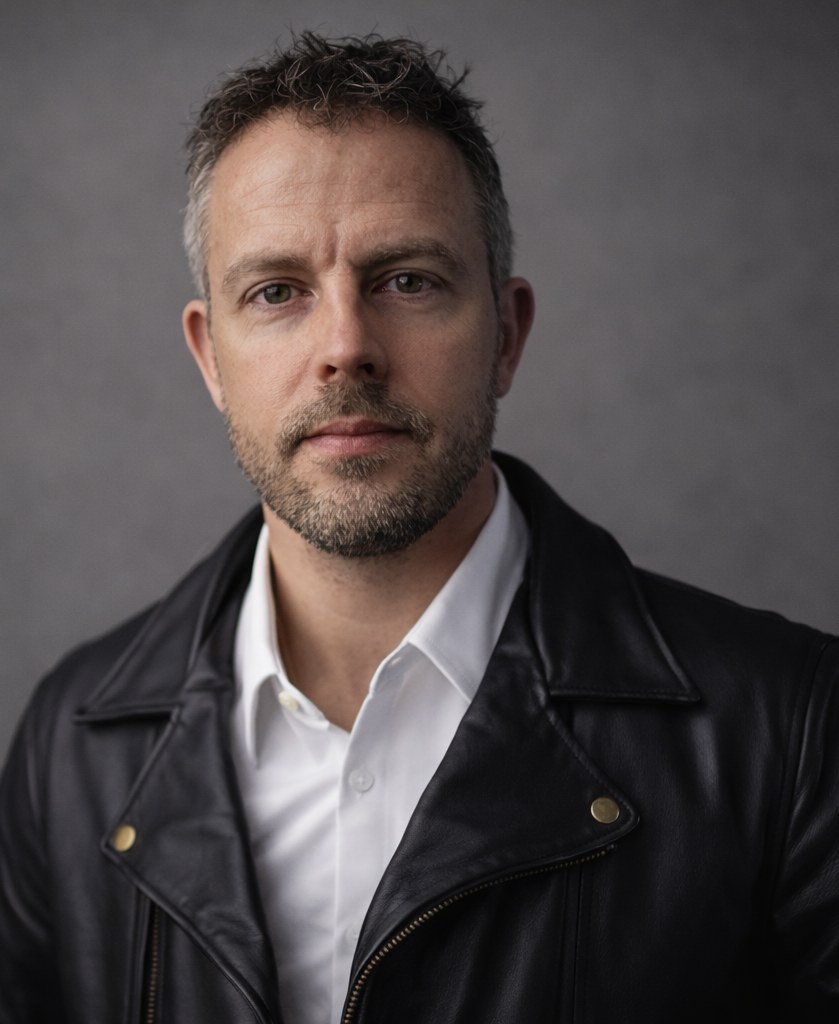
Jared R. Clark

USPTO Reg. No. 62,062San Francisco

What is claimed is:

1.An electrical engineer10, admitted to practice law12 and registered before the Patent Office14, configured to sit with inventors until the invention is actually understood16, and to write it down in terms that hold up years later18.

Jared R. Clark
FIG. 1 — the applicant
10
B.S. Electrical Engineering, South Dakota State University — cum laude, Honors College Distinction
12
J.D., University of South Dakota — South Dakota Law Review, published author and Managing Editor. Admitted in South Dakota, active.
14
Registered patent attorney — patent agent 2008, patent attorney 2008
16
200+ patent applications drafted and prosecuted; 350+ patentability, clearance, and freedom-to-operate searches
18
400+ technology agreements negotiated; $500M+ in enterprise contract value supported

What I do

I build intellectual property functions for companies making hard things — the portfolio, the invention harvesting, the disclosure process, and the decision about what gets filed and what stays a trade secret. I have done it from zero twice: once for a process-technology company whose active portfolio went from six applications to sixty in a year, and once for a Fortune 500 that had never filed a patent at all.

I also negotiate the agreements that decide how technology gets built, licensed, shared, and protected. Software and SaaS licensing, joint development, research collaborations, and procurement at enterprise scale.

I became an engineer before I became a lawyer, and that order still governs how I work. I read the paper. I sit in the room. I ask what a system is actually doing before deciding what to call it.

Selected record

  • 6 → 60Active patent applications in one year for a deep-tech client — all my drafting, under my direction
  • $500M+Enterprise technology contract value supported as Associate General Counsel at a Fortune 500
  • 400+Technology contracts drafted, negotiated, and closed
  • 14Patent researchers managed; built and taught a patent-searching course with a university economics department
  • 3GPP / IEEEStandards participation strategy and standards-essential claim work
  • A³ / AirbusActing Deputy General Counsel to an aerospace R&D incubator, embedded with engineers

Technologies I can read

Twenty years of sitting with engineers leaves a range. These are the fields where I can follow the specification without a translator.

  1. 01Software and computer systems
  2. 02Networking and network architecture
  3. 03Mobile and wireless telecommunications
  4. 04Industrial standards and protocols
  5. 05Encryption and cryptographic payment systems
  6. 06Semiconductors, including flash memory
  7. 07Database systems
  8. 08Sensors, actuators, and detection apparatus
  9. 09Autonomous vehicles and autonomous flight
  10. 10Jet engine and advanced aircraft systems
  11. 11High-power systems and renewables
  12. 12Electric vehicle infrastructure
  13. 13Medical and biomedical engineering, instrumentation, and diagnostics
  14. 14Consumer electronics

Where I work

Four areas where the technical reading and the legal judgment are hard to separate, and where I have done the work often enough to be useful on day one.

AI and machine learning

Claims that describe what a model actually does, written with the eligibility bar in mind rather than around it. Training data licensing, model and dataset agreements, and the harder question of what should never be filed at all.

SaaS and cloud

Licensing, subscription, and hosting agreements at enterprise scale — including the security, uptime, and data terms that decide whether a relationship survives its second year.

Medical devices and diagnostics

Instrumentation, detection apparatus, and biomedical engineering, prosecuted with attention to the regulatory path running alongside the patent one.

Standards and connected hardware

Semiconductors, wireless, sensors, and payment cryptography, including standards participation strategy and standards-essential claim work in 3GPP and IEEE.

Representative matters

  1. 01

    Building a patent program from six applications to sixty

    Seconded on-site to a privately held process-technology company, working alongside its Chief Intellectual Property Officer. Drafted more than fifty provisional and derivative applications in a year, established the inventor disclosure and trade secret practices that sustained the program, and audited a backlog of more than a hundred disclosures nobody had triaged.

  2. 02

    A Fortune 500's first patent program

    Stood up a strategic patent program at a company that had never filed. Drove identification of patentable subject matter from internal inventors and secured applications on cryptographic payment technology that exceeded the company's compliance requirements.

  3. 03

    Federal patent litigation

    Managed Activision v. MGM (No. 1:13-cv-01523) with outside counsel — an infringement claim reaching more than sixty thousand in-house-developed products. Favorably resolved.

  4. 04

    A $100M outsourcing relationship, renegotiated in pieces

    Weekly sessions brokering disputes over non-performance, undocumented charges, and post-execution modifications. Drafted roughly fifteen amendments, advised executives on the implications of each, and later joined a confidential committee developing exit strategies.

  5. 05

    A divestiture carve-out, built to implementation

    Led the shared-services separation for a contemplated cross-border sale of an entire casino property. Diligenced every IT contract tied to the business unit, determined what could transfer and what was barred, and contributed the transition planning document vetted by outside M&A counsel. The transaction was not ultimately pursued.

  6. 06

    Research collaboration between industry and a university

    Structured and negotiated the agreement — intellectual property ownership, publication rights, and downstream commercialization — between a manufacturer and a university research program.

The arc

  1. 2002 – 2007

    Director of Patent Search Services, SDSU Enterprise Institute

    Hired at nineteen to run searches for independent inventors. Left running a team of fourteen researchers, having built and taught a patent-searching course with the university's economics department.

  2. 2008

    Admitted to practice

    Registered before the United States Patent and Trademark Office, Reg. No. 62,062. Admitted to the State Bar of South Dakota, and to the United States District Court for the District of South Dakota.

  3. 2008 – 2012

    Patent attorney, South Dakota

    Drafting and prosecution across software, telecommunications, and industrial systems, alongside the trademark and technology transactions work that came with a general practice.

  4. 2012 – 2014

    Associate General Counsel, MGM Resorts International

    The company's first in-house patent attorney. Stood up a strategic patent program from nothing, managed federal patent litigation with outside counsel, and supported more than $500M in enterprise technology contract value.

  5. 2014 – present

    Independent and of counsel practice

    Patent programs, technology transactions, and privacy work for companies building hard things — including a period as acting deputy general counsel to A³, the Airbus innovation outpost in Silicon Valley, embedded with its engineers.

How I got here

In 2002, after my first year of electrical engineering, someone hired a nineteen-year-old to run patent searches for independent inventors at a nonprofit institute attached to my university's foundation. That job turned into three hundred and fifty searches, a team of fourteen researchers, a course I built with the economics department, and eventually law school. I have never really left that work. I have only done it at larger scale, for larger companies, on harder technology.

I grew up in a small town in South Dakota. I mention it because it explains something about how I practice: I would rather tell you the problem early and plainly than manage you toward it.

Why this work

The part of the job I have always found most meaningful is the moment the paperwork stops being an obstacle and becomes the thing that lets the work go forward. A claim that holds. A license that opens a dataset. A framework that tells a research team what they can do, not only what they cannot.

A researcher brings you something genuinely new and a date on the calendar after which it becomes public. You have days to understand it — not to summarize it, to understand it — well enough to describe what is novel in language that will survive people looking for reasons it shouldn't. I have spent eighteen years on that side of the table, and I still like it.

Contact

Available for in-house counsel roles and select consulting engagements.